

GST for Buying New Flat in Pune 2026 – Rates, Applicability & How to Save
GST for Buying New Flat in Pune 2026 – Rates, Applicability & How to Save
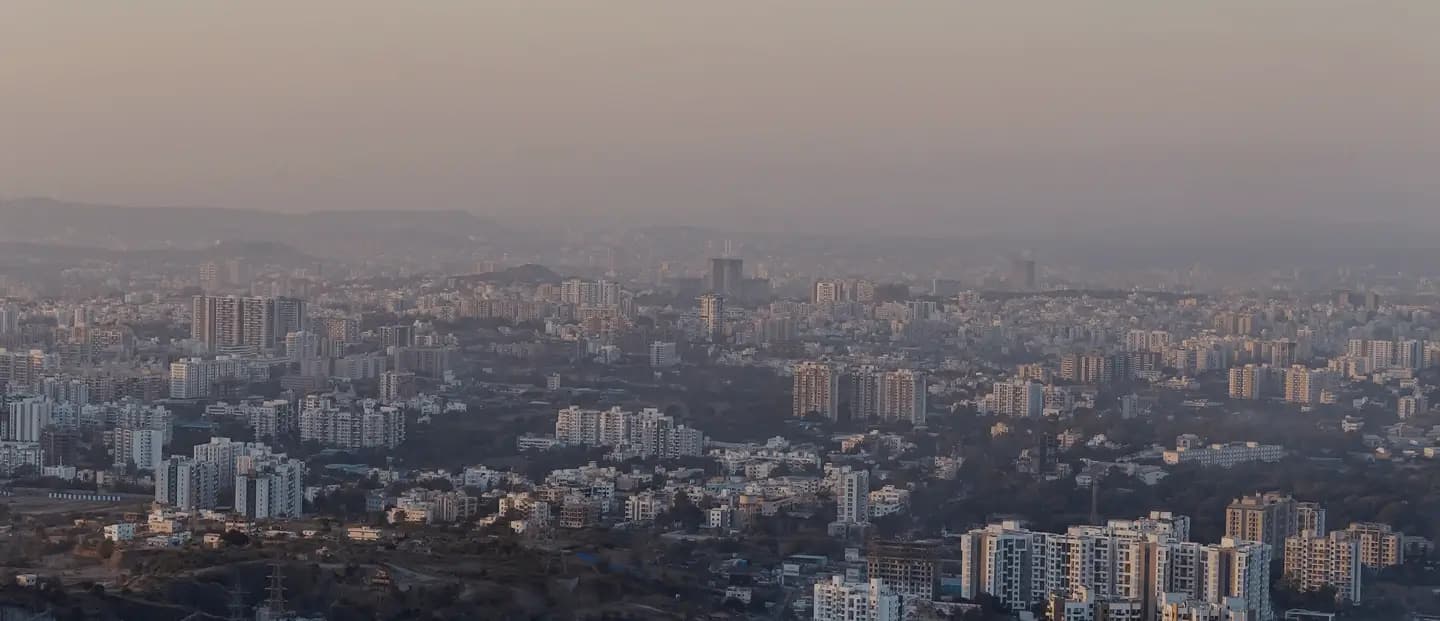
The real estate market in Pune 2026 is booming as new projects of flats appear all around Hinjewadi, Baner, Wagholi, and Kharadi. Understanding GST for buying a new flat in Pune helps homebuyers escape last-minute taxes and facilitates improved budgeting.




Malti Kulkarni
Malti Kulkarni is a content writer at RealEstate Talk with experience in creating SEO-optimised blogs, articles, and website content. She specialises in researching industry trends and transforming complex topics into clear, reader-friendly content. With a focus on real estate, SEO, and digital marketing, Malti helps deliver informative content that enhances brand visibility, engages audiences, and supports business growth through effective communication.
Why buyers in 2026 must understand GST before purchasing: As the GST rate for buying a new flat, GST on a new flat, and GST for buying a new flat in Pune vary as per type and stage, knowing this spares you from shock, assists precise budgeting, and may save lakhs.
What is GST on Property in India?
GST in real estate sector
GST on residential flats applies only to flats under construction, making them subject to supply of services or composite supply. Once the project becomes ready and an Occupation Certificate (OC) has been granted, the transaction becomes a transfer of immovable property and does not attract GST. Affordable housing attracts 1% concessional GST, while non‑affordable housing attracts 5% GST, both without input credit. Developers invoice GST on the sale agreement and recover it from buyers as part of the agreement or construction value. Buyers pay GST on residential flats, GST on new flats, and GST on flat purchases, all of which imply the same amount but are different as per project category.
Who pays GST – builder or buyer?
The GST on flat purchases finally has to be paid by the buyer; builders collect and pay GST according to agreement terms. Buyers must verify GST specifically on invoices.
When is GST Applicable on Buying a Flat in Pune?
GST on under-construction flats
As long as the flat remains unbuilt and the OC has also not been obtained, GST for buying a new flat in Pune and GST on the purchase of the flat are applicable. The taxes are paid at each payment point—booking payment, interim payment, and payment at the end. This means taxes are paid at the outset as non-refundable fees. In case of ongoing or yet-to-be completed flats, GST is equally taxed at 1% or 5%, respectively, as per affordability, and cannot be avoided prior to delivery of possession.
GST on ready flats
As soon as the project is completed and delivery of possession is made, GST for ready properties decreases to zero. Buyers of flats for which the OC and delivery of possession are already rendered and paid for pay absolutely no GST. This decreases ready-to-move properties by quite a margin on the taxation side, as GST, between 1% and 5% otherwise, is completely evaded. This becomes an intelligent tax-saving option for ready flats.
When GST is Not Applicable
There is no GST for resale units or ready-to-move-in completed flat property. GST on resale flats is nil because the flat has already completed commissioning and was transferred earlier. Purchase of resale or second-hand flats entails only stamp duty and registry fees but no GST on the cost of the flat. Even sales of lands pay nil GST. Hence, if GST minimisation forms part of your strategy, opting for resale or ready-to-move-in options can significantly reduce your cost.
GST Rates for Buying a New Flat in Pune (2026)
1% GST for affordable housing – criteria
Affordable segment refers to flats ≤ ₹45 lakh (excluding cost of land) and ≤ 60 sqm carpet area in tier 1 cities like Pune. A new flat purchase under this falls under 1% GST without ITC.
5% GST for non‑affordable housing
Flats above ₹45 lakh or higher carpets fall into the non-affordable category. GST on the purchase of a flat here is 5%, also without ITC.
GST Rate Table – Affordable vs Non‑Affordable Comparison
| Flat Type | Carpet Area (Pune) | Price Excl. Land | GST Rate |
|---|---|---|---|
| Affordable | ≤ 60 sqm | ≤ ₹45 L | 1% |
| Hospitals | Premium healthcare facilities nearby | ||
| Non‑Affordable | > 60 sqm | > ₹45 L | 5% |
This table clearly shows how GST on residential flats is calculated by reference to affordability and size and underpins the need to make an informed decision between affordability and non‑affordability.
GST Exemption on Ready‑to‑Move and Resale Flats
What qualifies as ready‑to‑move?
Builder possession with an Occupation Certificate (OC) or Completion Certificate counts as ready‑to‑move. There are exemptions from GST for them; GST on ready-to-move flats is 0.
Why resale flats are GST‑free
Since the resale flat was already completed and handed over earlier, GST was paid on resale, and GST on resale flat does not apply.
Documents to prove completion/OC
In acquiring ready or resale properties, you are required to ensure the following:
- Possession letter from builder or previous owner
- Copy of Completion Certificate (OC) issued by the local authority
- Municipal completion paperwork
- Invoice or agreement clearly stating OC status
These deeds also assure you that the GST rate for buying a new flat will not be applicable and shield you from unintended taxation.
GST Calculation Example (With Real Pune Scenario)
Example 1 – Affordable Flat (Below ₹45 Lakhs)
- Flat price excluding land: ₹40 lakh
- GST at 1% of ₹40 lakh = ₹40,000
- Total payable = ₹40,00,000 + ₹40,000 = ₹40,40,000
- This reveals how GST on new flats under affordable housing remains low and controllable.
Example 2 – Premium Flat (Above ₹45 Lakhs)
- Flat price excluding land: ₹60 lakh (assume land cost ₹20 lakh separately)
- GST at 5% of ₹60 lakh = ₹3,00,000
- Total payable = ₹63,00,000
- Exclusion of the value of land is significant here; GST is on the purchase of a flat only on construction cost and not on land.
Land Value Exclusion – How It Affects GST
In situations where there is a significant cost of land included, GST taxes the construction part only. Suppose a flat of ₹80 lakh in totality, including the cost of land of ₹20 lakh; GST taxes only on ₹60 lakh. This also saves buyers from payment of taxes on the cost of land and retains GST on the purchase of a flat and keeps the purchase compliant and economical. Realisation of this dichotomy may prevent overpayment.
Other Charges with GST Impact
Parking, Maintenance, and Clubhouse Fees
While making new flat purchases, amenities included like parking, clubhouses, or maintenance could invite GST depending on how the buyer pays:
- Bundled with flat sale: GST (1% or 5%) as part of the composite deal applies if under construction.
- Separate monthly association fees: In case of over ₹7,500/month or RWA annual collections > ₹20 lakh, 18% GST on monthly maintenance is applicable.
- So GST for flats encompasses more than flat cost, making the buyer realise there will also be a tax obligation for ancillary costs.
GST on Interior Work & Modular Furniture
Interior fit-outs or modular furniture purchased from the constructor or elsewhere afterwards also attract GST, usually at 18%. This does not account for GST for apartments, and this applies to goods and services utilised on interiors after taking possession. Purchasers are required to count this cost and request clarification on GST amounts for add-on work.
GST on Advance Payments or Booking Amounts
Even if building has yet to begin, advance payments or booking of a flat also draw GST from day one. This applies to the first payment made by buyers too. Hence, GST for buying new flat in Pune is incurred from day one, and first-stage payments are marginally higher due to tax inclusion. Installment planning and payment schedules go a long way in avoiding surprises.
GST vs Stamp Duty vs Registration Fees
How Stamp Duty is Calculated in Pune
Stamp duty for Pune tends to be between 6% and 7%, depending on ownership (for example, female buyers are eligible for concessional rates). The registration fee tends to be around 1% via the GRAS portal. State-level taxes, as these are on top of GST and are charged regardless of project status. Even in resale apartments where GST on resale flats does not come into play, there is payment for stamp duty and registration.
Difference Between GST and Registration Charges
GST applies only to projects under construction, and it applies to construction value. The buyer has to pay stamp duty and registration for all property sales. They are statutory fees and are unrelated to GST. Buyers thus pay both, if applicable.
Total Effective Cost for Buyer (2026 Scenario)
A full cost breakdown includes:
- Flat price (construction + land)
- GST on purchase of flat (1% or 5% on construction portion if under-construction)
- Stamp duty (~6–7%)
- Registration (~1%)
- Add-on charges (parking, interiors, maintenance) plus applicable GST (1%, 5%, or 18%)
Its wide view helps consumers understand total effective cost and never overestimate cost.
How to Save GST While Buying a New Flat in Pune
Opting for affordable housing (1% GST)
Selection of a flat up to ₹45 lakh, excluding the cost of land, with a carpet area of ≤ 60 sqm is exempt from 1% GST. This GST for apartments reduces the cost significantly as compared to non-affordable housing.
Choosing ready‑to‑move‑in or resale flats
Choosing already finished flats excludes GST on resale flats or GST on ready-to-move flats, and you pay 1% to 5% outright in cash. Without payment of GST on your flat, your actual cost decreases immensely.
Negotiating builder discounts or GST waivers
Some developers offer discounts or GST-inclusive pricing to be competitively priced. Buyers need to negotiate early and ask if the builder pays part of the GST. Clever negotiating may be able to reduce GST for buying a new flat in Pune in reality.
Avoiding bundled amenities (where legal)
By unbundling services and paying for parking, interior, or clubhouse individually, you avoid payment of GST on flat purchase as part of composite services while under construction. Paying afterwards after taking possession can reduce or dodge early payment of GST on add-on services.
Final Thoughts
Understanding the GST for buying a new flat in Pune in 2026 helps you grasp the laws of taxes and save money wisely. Knowing how and when GST enters the scene, being able to identify affordable and non-affordable slabs, and making the right selection of stages (under construction or ready for resale) can be quite a game-changer. Paying just 1% as tax with affordable housing saves taxes, and opting for ready-made properties rules out GST altogether. Read carefully the agreement of builders and steer clear of add-on extras and negotiate GST-linked clauses. Well-informed decisions allow you to pay far less and invest prudently and cost-effectively in Pune’s booming real estate market.
FAQs on GST for Buying New Flat in Pune (2026)
 Share on Facebook
 Share on Linkedin
Leave a Comment
Trending Blogs

Sep 3, 2026
Movers and Packers Pune: 2026 Cost & Locality Guide

Sep 3, 2026
Interior Company in Pune: 2026 Costs | RealEstate Talk

Sep 3, 2026
What Is an Occupancy Certificate? Pune Guide | RealEstate Talk

Sep 3, 2026
New Projects in Pune 2026: Full City Guide

Sep 2, 2026
Malegaon Nashik: Complete 2026 Guide | RealEstate Talk
Sign up for the newsletter
If you want relevant updates occasionally, sign up for the private newsletter. Your email is never shared.
