GST on Commercial Property in 2026: Buy, lease, save
In 2026, GST on commercial property shapes every purchase, lease, or investment. Under-construction projects and rent attract 18%, while ready properties with a completion certificate and land sales remain outside GST. For tenants, input tax credit can offset the rent outflow, and for buyers, timing the purchase can save lakhs. This guide covers GST on commercial property purchases, leasing, exemptions, and credits in plain words.
Dilip Apte
September 21, 2025 · 1 min read
Understanding GST on commercial property in India
GST treats most property activity as a service. Land is separate.
Supply of service: Construction, leasing, and renting all fall under GST.
GST on property vs land: Pure land sale is outside GST; only stamp duty applies.
Residential vs. commercial: Residential rent for self-use is exempt. Commercial rent is taxable at 18%.
Land vs Building Rule
Vacant plot – no GST.
The same land with services bundled (roads, water, drainage) – could attract GST unless clarified as exempt.
GST Rates on Commercial Property (2026 Update)
The new GST 2.0 reform simplified slabs. Today, commercial real estate follows standard service rates.
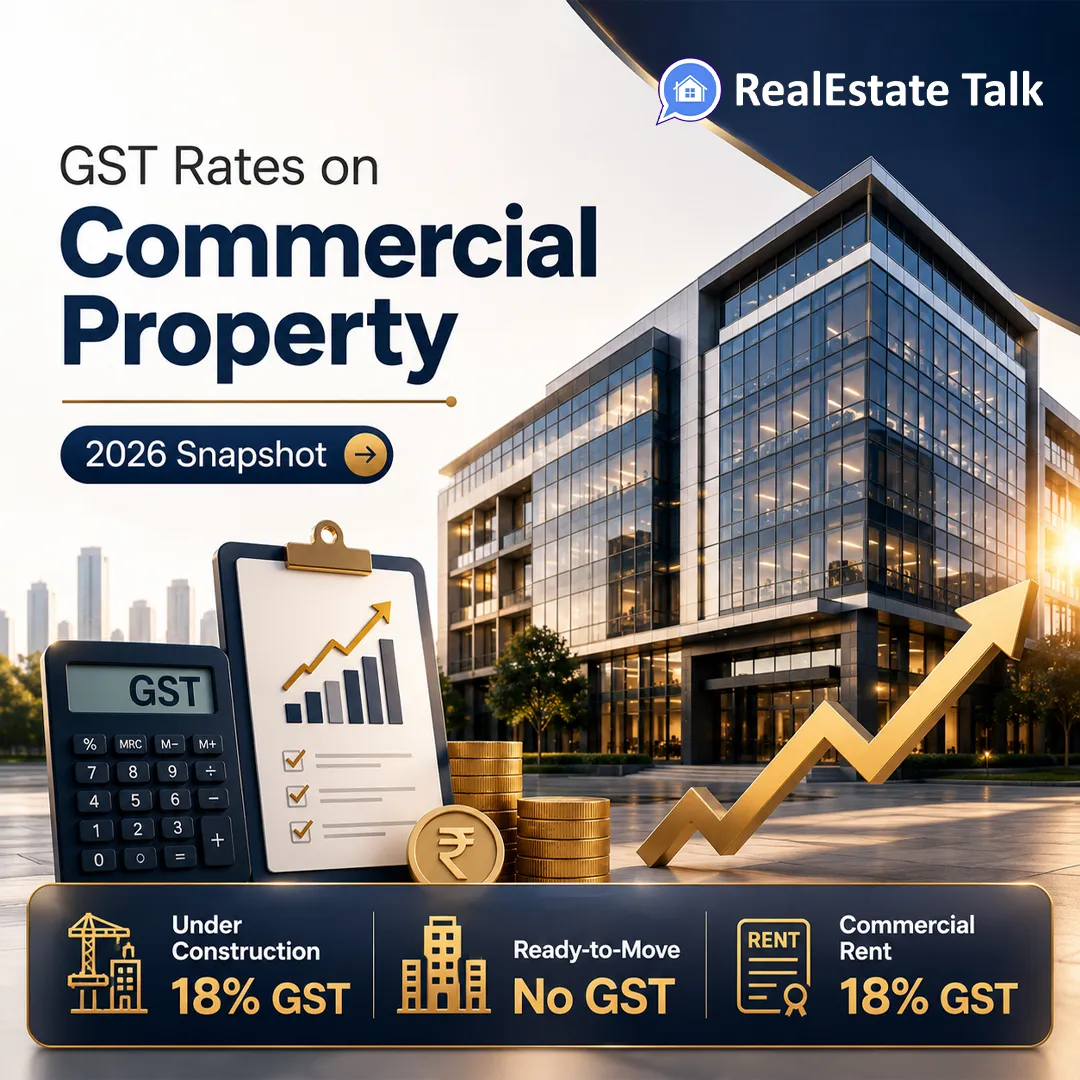
Under-construction property: 18% with land abatement.
Renting/leasing: 18% charged by landlord or under RCM.
Ready with completion certificate (CC): 0% (outside GST).
Land sale: 0% (outside GST).
2026 Rate Snapshot
Transaction
GST status
Rate
ITC
Under-construction office/retail
Taxable
18%
Builder ITC, buyer pays GST
Commercial rent/lease
Taxable
18%
Tenant-ITC if registered
Completed property with CC
Outside GST
0%
NA
Pure land sale
Outside GST
0%
NA
GST on commercial property purchase
Buying a property? The tax hinges on whether it’s ready or not.
Under-construction – 18% GST on 67% of the value (land portion 33% exempt).
Ready with CC – No GST. Only stamp duty + registration.
GST on the sale of commercial property applies before CC. After CC, the sale is exempt.
GST on the sale of a building follows the same rule.
GST on land and GST on the sale of land are always outside GST.
Quick example
Property price = ₹1 crore.
Taxable base = ₹67 lakh (after land deduction).
GST at 18% = ₹12.06 lakh.
Ready vs. Under Construction
Ready to move: cleaner, no GST hit.
Under construction: upfront GST but sometimes a lower ticket price.
GST on an under-construction commercial property
Construction is a service. That’s why it attracts GST.
GST on commercial property under construction = 18%.
Applies to demand notes and payments before CC.
A builder can claim ITC on materials like steel, cement, and tiles.
Worked math
Quoted price: ₹1 crore.
Effective GST load: ₹12.06 lakh.
Total buyer payout: ₹1.12 crore + stamp duty.
GST on renting and leasing commercial property
Commercial rent counts as a supply of service.
Rate: 18%.
Who pays: Landlord charges if registered; otherwise, the tenant pays under RCM.
Threshold: Small landlords below ₹20 lakh turnover don’t have to register.
Use cases
Coworking spaces: bundled rent + services at 18%.
Choosing to buy or lease commercial office space hinges on whether you can claim ITC and how you plan your capital.
Input Tax Credit (ITC) and business impact
Can businesses claim ITC?
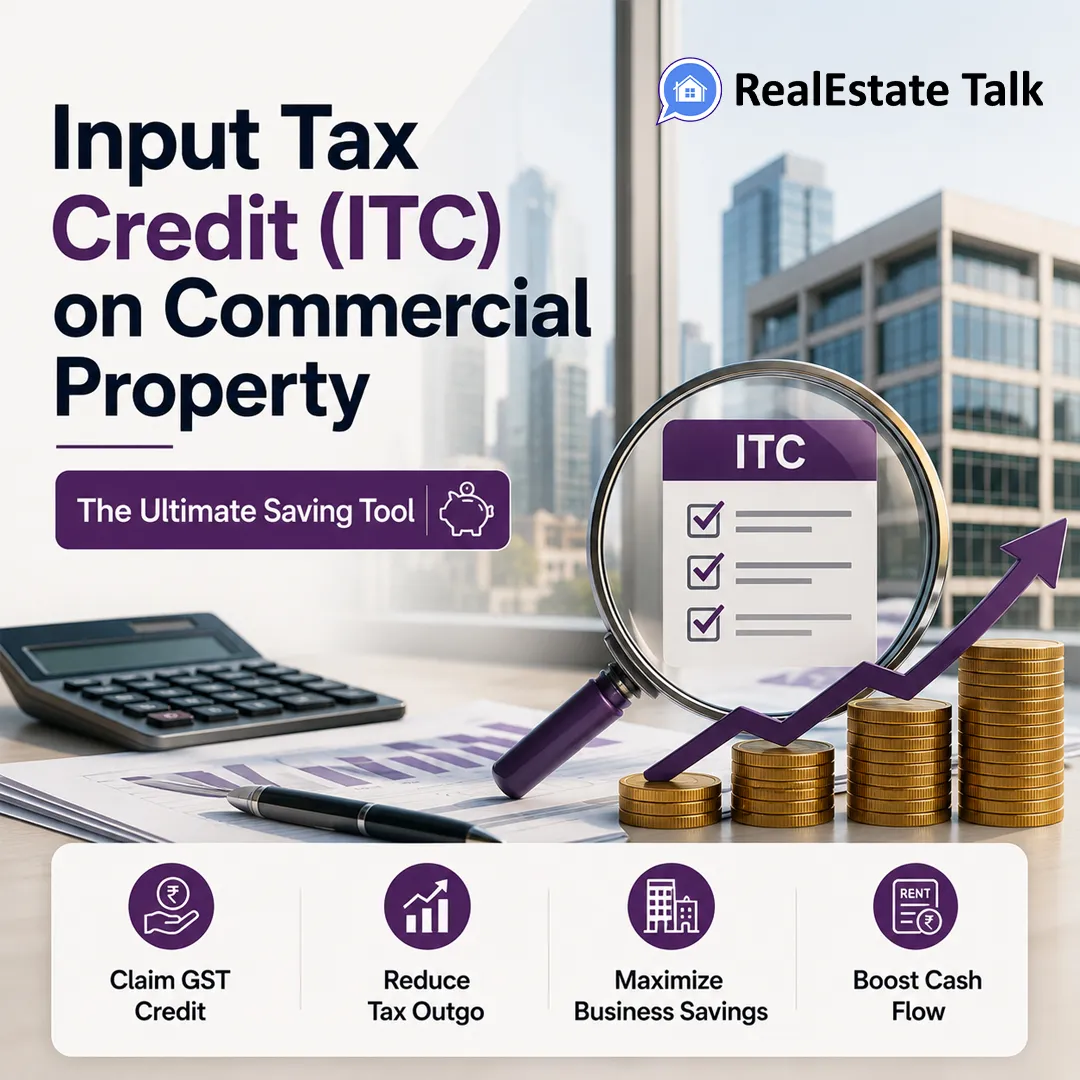
Yes, for GST on rent.
No, for the construction of property intended for leasing (after the Budget 2025 amendment).
Who can claim ITC
The business is GST registered.
Holds a valid tax invoice
The expense is for business use.
The supplier has deposited the tax.
Returns filed within deadlines
Example
Monthly rent: ₹100,000.
GST: ₹18,000.
Output GST liability: ₹36,000.
ITC set-off: ₹18,000.
Final cash payout: ₹18,000.
Common reasons ITC gets rejected
Delayed or missing invoices
The supplier hasn’t paid or filed GST.
Expenses on civil construction or interiors
Impact of GST on buyers, tenants, and investors
Buyers: Ready properties look more attractive—no GST, only state taxes.
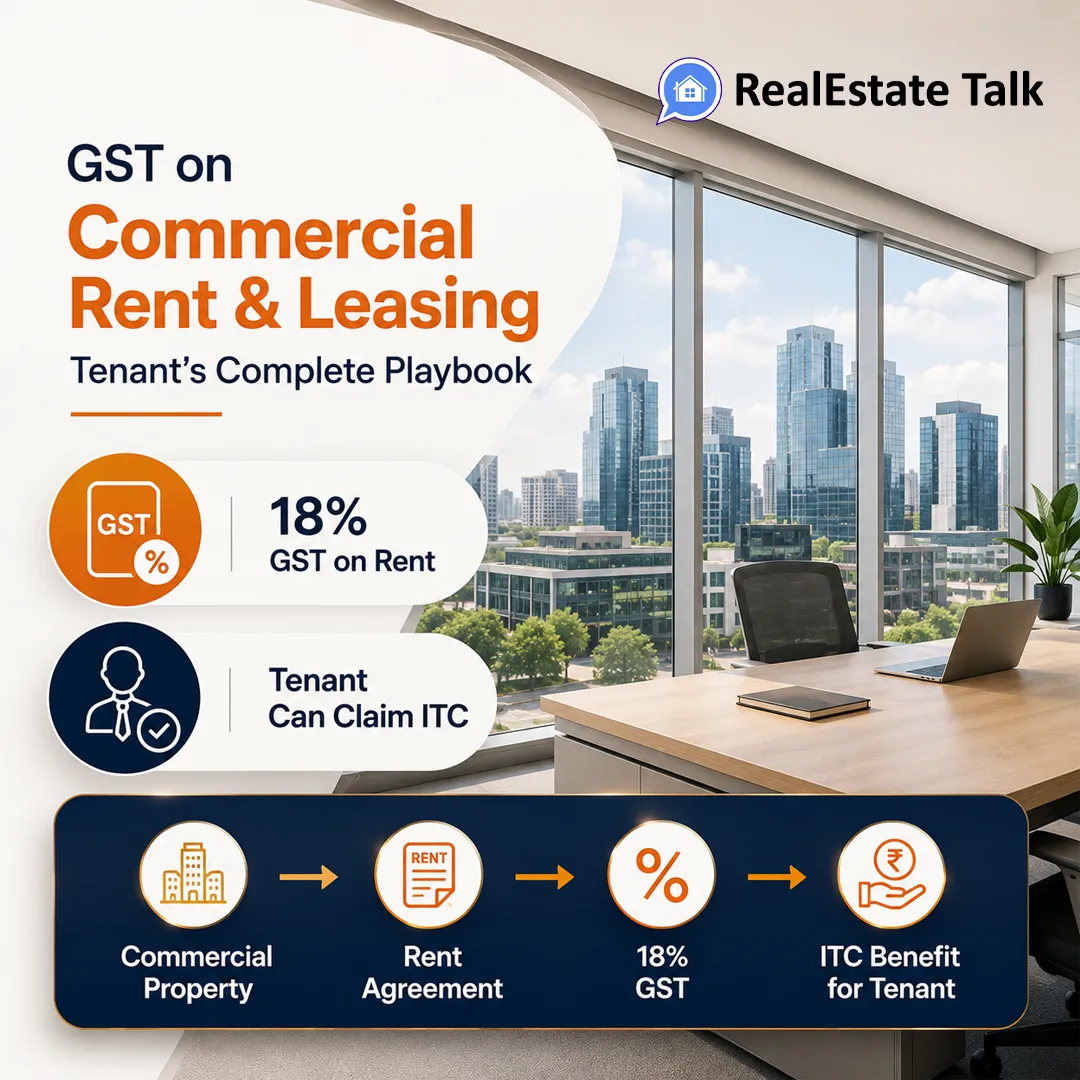
Tenants: 18% GST on rent, but ITC offsets it if registered.
Construction cost dropped 3–5% with lower GST on cement and marble.
Demand is shifting toward ready Grade-A stock in city cores.
Exemptions and special cases
No GST on land: Pure sale exempt.
GST on property tax: This is charged separately by local bodies.
Special cases:
Religious precinct rentals below thresholds are exempt.
Some government services are exempt.
Educational institutions enjoy exemptions for specific uses.
Compliance and registration for business owners
Cross turnover limits and GST registration are mandatory.
Practical tips to save on GST on commercial property
Choose the right moment to buy.
You can skip GST by choosing properties with a completion certificate.
Include GST charges when budgeting for an under-construction property.
Use rent invoices
Ensure the landlord gives you GST-compliant invoices for ITC.
Verify the GSTIN and SAC code on every rent invoice.
Check the builder and project credentials.
Look up the builder’s or developer’s GST number before making payments.
Cross-check the completion certificate and project status on RERA.
Plan interiors with tax in mind.
Civil works and permanent structures block ITC.
GST credit may still apply to movable furniture and office equipment.
Negotiate with clarity.
Ask for a rent breakup that lists GST as a separate line.
Put GST obligations in writing within the lease contract.
Conclusion
In 2026, the GST rules are simple but strict:
The current rule sets 18% GST on commercial rent and construction but 0% on ready property and land.
Purchase during construction and you’ll pay GST. Buy once the completion certificate is ready, and you won’t.
ITC is powerful for tenants but blocked for build-to-lease construction.
Staying on top of registration, invoicing, and filing helps you avoid penalties.
Before signing, check CC, GSTIN, and invoice structure. Smart moves now save lakhs later.
Compare deals side by side on the RealEstate Talk App to avoid surprises.