Loading content...
Loading content...

Ready Reckoner Rate – What Does It Mean and How to Calculate It?
Purchasing property in India is never merely about the emotional pleasure of having a home – it is also about knowing the numbers involved in the purchase. The ready reckoner rate is one of the terms that people encounter when discussing the property. This most commonly refers to the circle rate, or guideline value, or reckoner rate, and is the government-determined minimum price of land or property. The ready reckoner rate not only dictates the stamp duty and registration fees but in some cases also your eligibility to take a home loan, regardless of whether you are purchasing in Mumbai, Pune, or any other smaller town.


Dilip Apte
September 12, 2025 · 1 min read
The concept of the reckoner rate is paramount to property buyers, sellers, and investors. Why? Because it is illegal to pay less than this, knowing the correct rate can be used as a tool in intelligent investment planning. This blog will address the meaning of the ready reckoner, its significance, factors affecting the ready reckoner, and a stepwise process on how one can calculate the ready reckoner rate efficiently. So let’s get started!
Let’s start with the basics. The ready reckoner’s meaning is straightforward; it is the amount of money the government puts on the worth of properties in a certain district. Consider it like the official price tag of a property, with which property taxes and registration are done.
However, do not misunderstand the ready reckoner rate meaning with the general reckoner meaning. The latter merely means a guide or reference document, whereas, in real estate, it is particularly associated with property valuation.
The state government updates the ready reckoner rate every year to match the growth of the city, the development of infrastructure, and market forces. In the example of Maharashtra, the rates of the ready reckoners are revised each year, and this has helped to bring fairness and minimise the under-reporting of the property deals.
Thus, when someone asks what the ready reckoner rate is, you can confidently say that it is the lowest valuation of property fixed by the government, below which no property can be registered.
The value of the ready reckoner rate can hardly be overestimated. And here’s why:
The ready reckoner rate is therefore significant in maintaining the fairness of property transactions, traceability, and being tax compliant.
Want to understand property valuation better?
Join our property community and learn from experts about reckoner rates, stamp duty, and more.
Download the AppThe ready reckoner rate does not always apply uniformly – it differs according to a number of factors that influence property value in various locations. Key Factors:
As an example, the ready reckoner rate in Mumbai is higher by a considerable margin in comparison to smaller cities. On the same note, the ready reckoner rate at Pimpri Chinchwad can vary with the growth of industries and residential needs as compared to the ready reckoner rate at Pune.
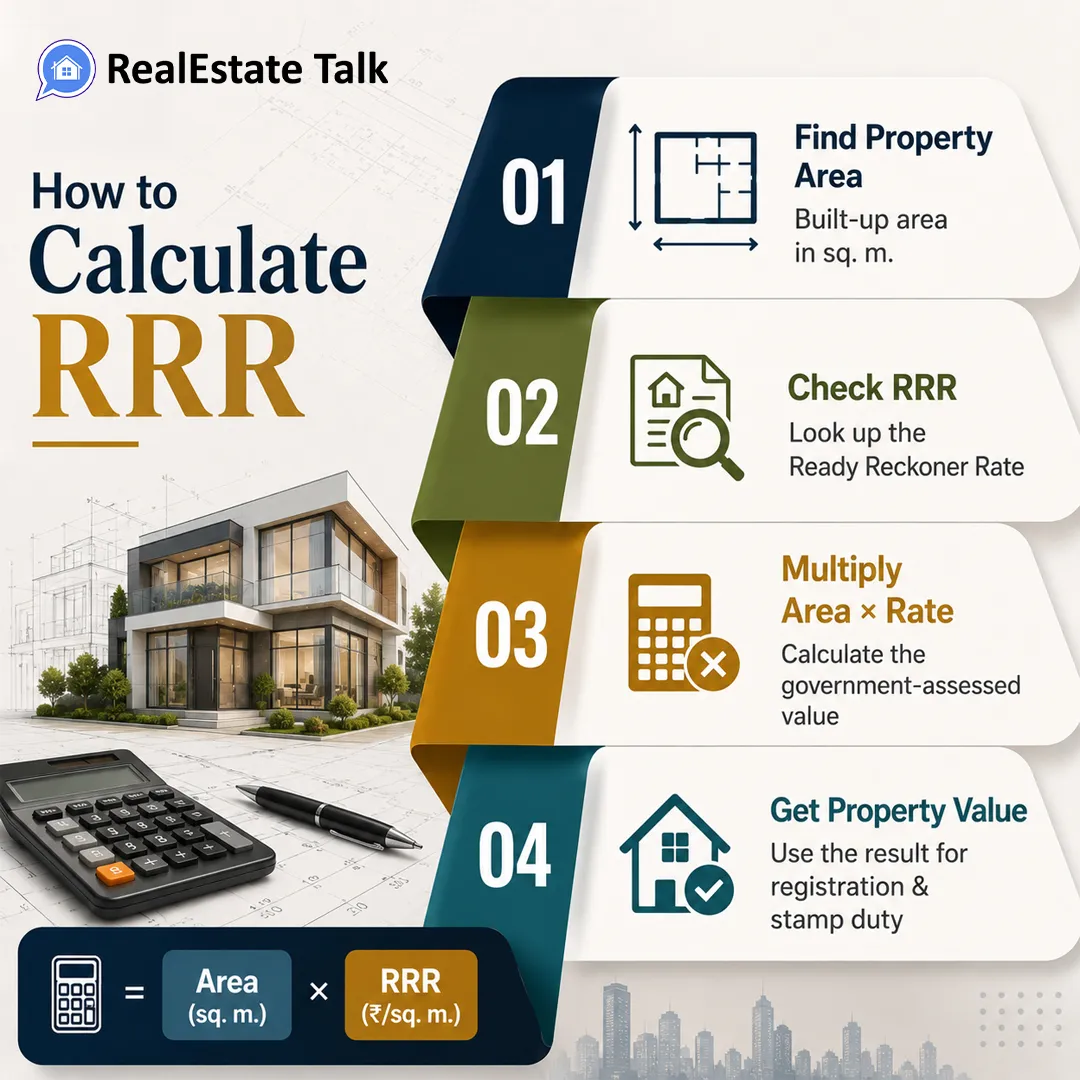
How to calculate the ready reckoner rate is one of the most frequent questions. Fortunately, it is not rocket science. The Formula for the calculation of the ready reckoner rate is: Ready Reckoner Rate = RRR Value = Built-up Area x Ready Reckoner Rate. Thus, taking the built-up area of your flat to be 1,000 sq. ft., and the rate set by the government to be ₹10,000 per sq. ft., then: 1,000 x 10,000 = ₹10 lakhs (RR value)
It is this process that is more formally known as the ready reckoner rate calculation.
To get it down further, here’s a comparative case for the ready reckoner rate calculation:
Pay attention to the fact that the RR value does not necessarily indicate the market price. In some cases, there is a higher market rate, and in some cases, a lower one, which opens valuation gaps.
The ready reckoner value noted is merely the government value of your property, which is used as the starting point in determining tax and registration. It has a direct influence on three major finance areas:
The greater the rate of the ready reckoner, the greater the stamp duty. The market or the reckoner is always paid by the buyers because of the higher value.
Banks take into consideration the ready reckoner value when issuing loans. In case the price of the property is underestimated, the loan eligibility can decrease.
A ready reckoner is utilised by municipalities to compute property tax per year in order to ensure that there is equity in various localities.
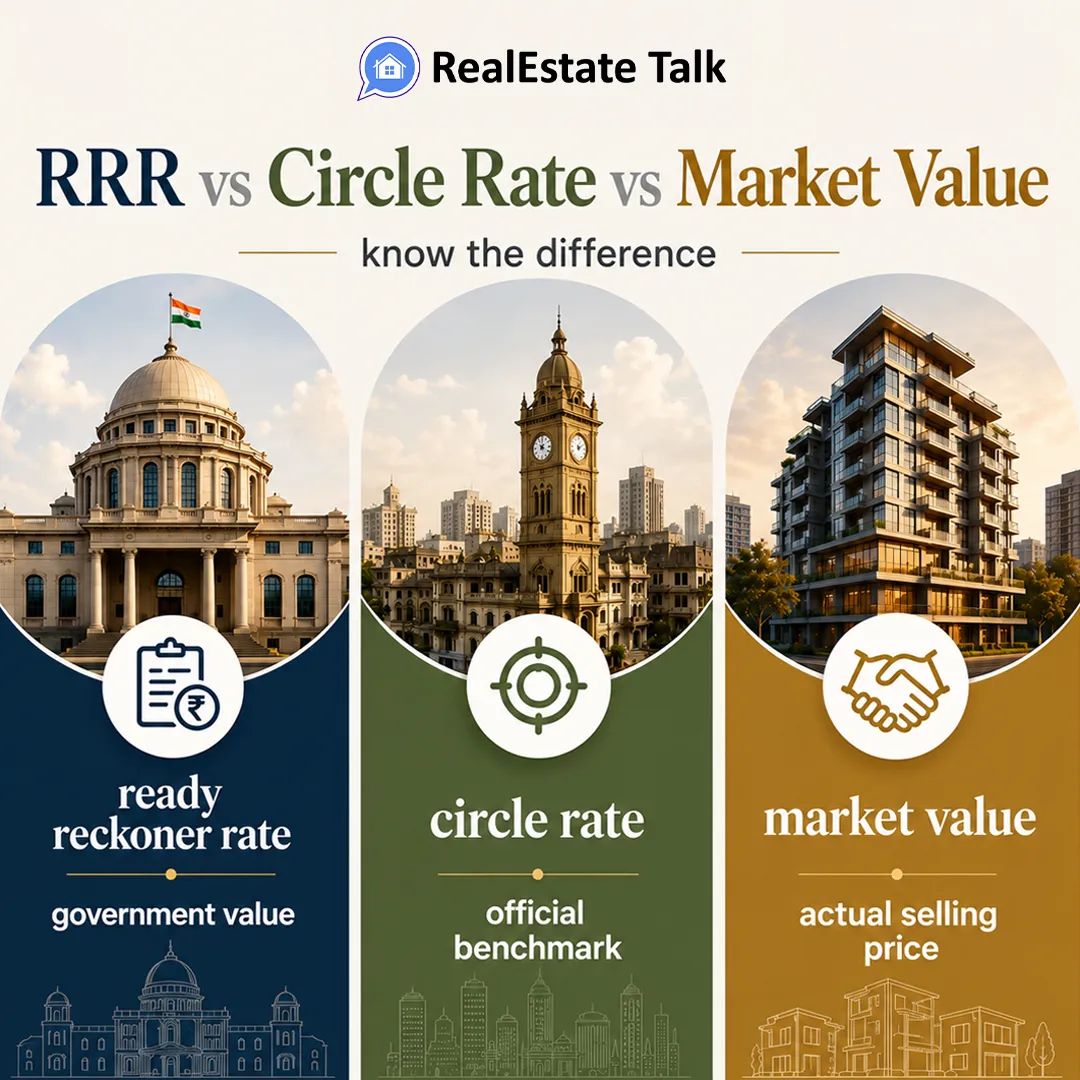
It is important to know the distinction between the reckoner rate and the market rate.
Market rates are normally higher than the reckoner rates. However, when you sell at a lower price than the ready reckoner rate, the tax department can work out the stamp duty and income tax at the higher reckoner price.
The sale of a property at a price lower than that of a ready reckoner would raise legal and tax matters.
The concept of the ready reckoner rate is common across the country, but the numbers themselves vary greatly, based on the city, state, and type of property. So let’s have a look at how these rates vary in major regions of India.
Being the most expensive real estate in India, the ready reckoner rate in Mumbai is one of the highest rates in the country. There are different residential, commercial, and industrial rates.
The ready reckoner rate in Pune has been pushed upwards due to the IT boom over the past decade. Baner and Hinjewadi are the popular suburbs that are more highly rated.
As an industrial center, the ready reckoner rate in Pimpri Chinchwad has increased steadily, particularly in the regions around auto-manufacturing clusters.
Ready reckoner Maharashtra at the state level is updated on an annual basis. Individual charts are in each district, town, and taluka.
Similar valuation systems, even in union territories (under the title ‘circle rates’ or ‘guideline values’), are used.
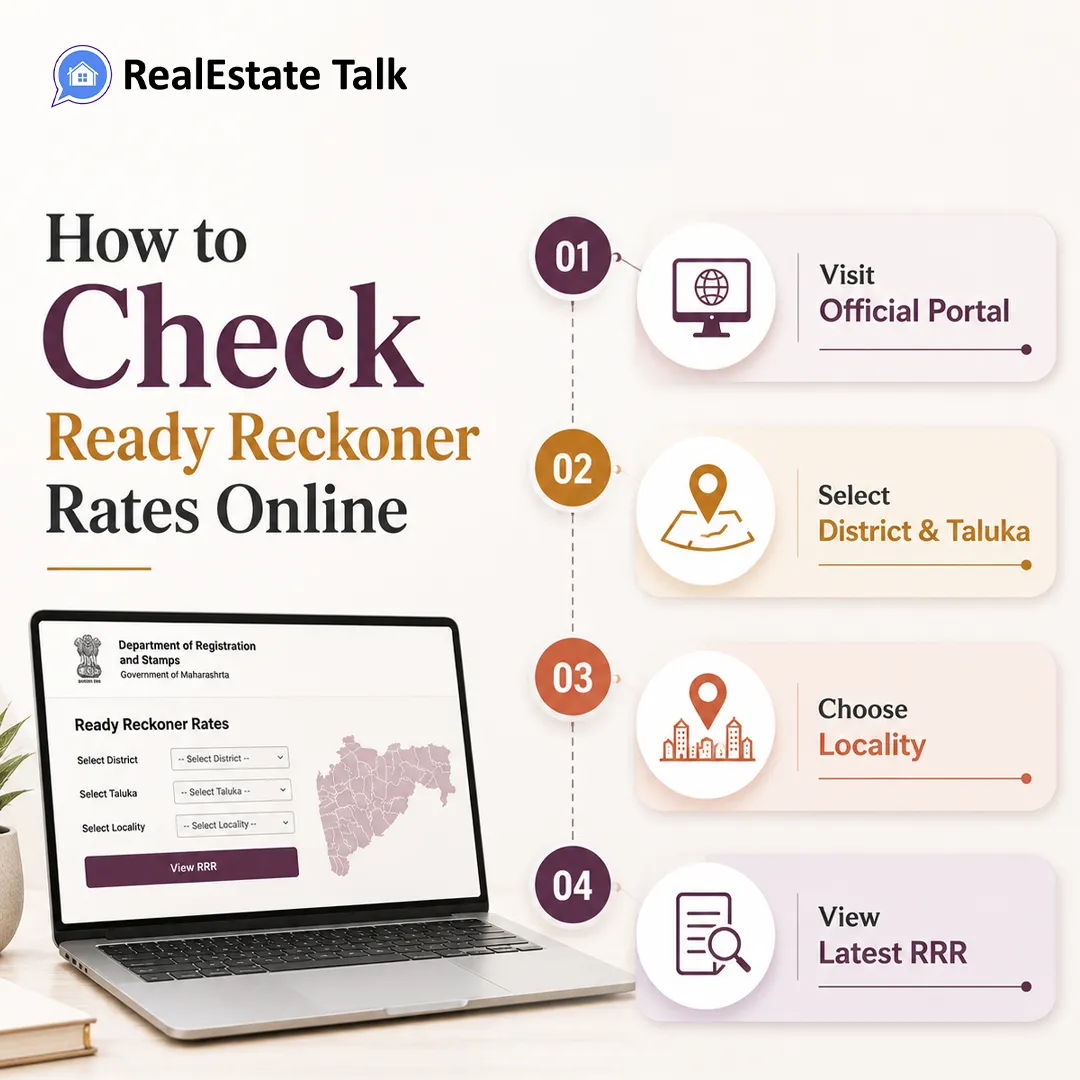
Checking the ready reckoner rate is not hard due to technology. And the process to be followed is mentioned below. Steps:
The ready reckoner portals also assist buyers with different information required to make a safe purchase and not fall into the traps of fraudsters or scammers.
Although the current ready reckoner system is helpful, it is not perfect. Reasons are stated here:
Effects on Affordability: Repeated hikes in the reckoner value increase stamp duty and registration fees, such that housing has become less affordable to middle-class consumers.
The real estate market in any region of the country is very sensitive to RR changes, and the reasons for it are:
For instance, in the past three years, in Maharashtra, a consistent rise in RRR has slowed registrations within certain districts, while more moderate rises within other districts leveled the playing field.
In conclusion, the ready reckoner rate is the government mechanism to maintain a fair deal of property transactions, taxation, and transparency. You now understand what a ready reckoner is, what the ready reckoner rate is, and even how to find the ready reckoner rate using easy formulas or using web-based tools.
So, before buying a property, always keep in mind to look at the official ready reckoner rates on the Maharashtra government website or consult professionals. Being updated will make sure you save money, time, and legal hassles.
Leave a Comment
Trending Blogs

Apr 1, 2026
How to buy a fully furnished house with less brokerage

Mar 31, 2026
Guide to Finding Your Perfect Home in Pune – Tips & Areas

Mar 30, 2026
Guide to real estate commission rates in India.

Mar 30, 2026
Complete Interior Designer Price Guide in India.

Mar 30, 2026
Guide to Interior Design Services for Home Interiors.
Sign up for the newsletter
If you want relevant updates occasionally, sign up for the private newsletter. Your email is never shared.