


Commercial Lease Agreement: What You Need to Know Before Signing
Commercial Lease Agreement: What You Need to Know Before Signing
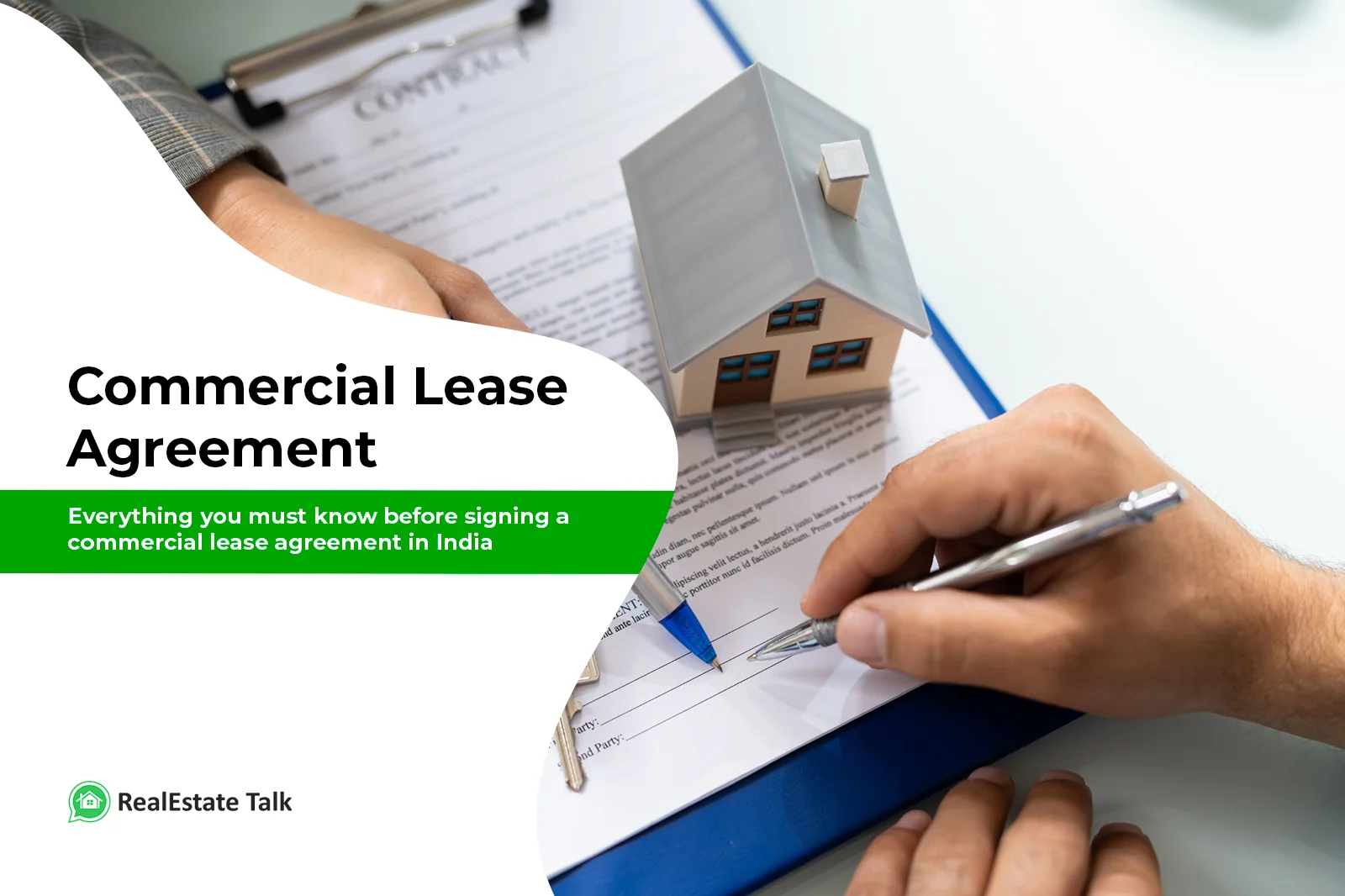
Finding the right place for your business is exciting. But before you get the keys, you’ll probably be asked to sign a Commercial Lease Agreement. This isn’t just a rent receipt. It’s a contract that decides how you can use the space, how much you’ll pay, and what happens if things change.



Radhika Jadhav
Radhika Jadhav is a content writer at RealEstate Talk with a strong passion for creating engaging, SEO-friendly content that informs and inspires readers. She specialises in developing blogs, website content, and digital marketing copy focused on real estate and online growth. Radhika combines creativity with data-driven content strategies to help brands strengthen their online presence, improve search visibility, and connect effectively with their target audience.
If you’ve ever wondered what a commercial lease agreement is and how to make sure it’s fair, this will walk you through the terms, types, and small details that make a big difference.
What is a Commercial Lease Agreement?
Think of the commercial lease agreement as a handshake (okay, more like a 17-page wordy handshake) between two parties – the landlord owns the place, and the tenant rents it to run a business. The terms spell out who pays for what, the rent, and what you can and can’t do in that space.
Meaning & Legal Definition
So, “what is a commercial lease agreement?” It’s a legally binding contract for renting a business spot – an office, a restaurant, a warehouse, or a fancy shoe store. This isn’t your average flat agreement; this one’s got teeth! Every detail’s spelt out, from how much rent gets paid to what happens if someone blows up the AC.
Why It Matters for Businesses and Startups
For a business, this agreement makes sure you have a space to run things, set up your gadgets, and build your empire. Startups, especially if you’re hustling in India, should pay close attention because a sneaky clause in your company lease agreement could mean losing your deposit, renovations, or worse – your location. You want to keep your shop, not spend all day negotiating with a landlord.
Difference Between Commercial & Residential Lease
| Aspect | Residential Lease | Commercial Lease |
|---|---|---|
| Purpose | Living, flat agreement, home life | Shop lease agreement format, business |
| Lease Term | 1 yr or month -to-month | 3–10 yrs or beyond |
| Tenant Protection | Strong legal/statutory | Weak, contract-only |
| Negotiability | Minimal | Full menu, everything negotiable |
| Financial Responsibility | Rent + light repairs | Rent + taxes + insurance + upkeep |
| Tenant Turnover | Fast-moving | Rare, built for staying put |
| Stamp Duty/Registration | Flat, straightforward | Variable, depends on agreement terms |
| Taxation | Simple, home-focused | GST, business deductions, more complex |
Types of Commercial Lease Agreements
No two leases are identical. The structure changes depending on how costs are split and how the rent is calculated.
Gross Lease
The tenant pays a fixed rent, and the landlord covers most property expenses like- taxes, insurance, and maintenance. Common in offices and retail spaces. Easy to budget for, but the base rent may be higher.
Net Lease (Single, Double, Triple)
- Single Net: You pay rent plus property taxes.
- Double Net: Add insurance to your bills.
- Triple Net (NNN): You cough up for rent, taxes, insurance, and maintenance, and you get pretty much everything.
Percentage Lease
You pay a base rent plus a percentage of your business revenue. Usual for retail spaces or restaurants in malls. Risky but good if you’re expecting big sales.
Modified Gross Lease
Everything’s negotiable – expenses, repairs, utilities. You and the landlord decide who pays what. Nice for folks who love a good deal.
Build-to-Suit Lease
The landlord designs or customizes a space just for your business… bakery ovens, glass walls, whatever you want. It usually involves a long-term commitment.
Key Clauses to Watch in a Commercial Lease Agreement
Rent & Escalation Clause
Details how much you’ll pay and when rent will increase. Even a small percentage rise each year can snowball, so know the escalation terms before signing.
Lock-in Period & Lease Term
Lock-in means you’re stuck for a set time; like, if you bail early, you could lose your deposit or pay a fine, and the standard lease terms are 3, 5, or 10 years.
Maintenance & Repair Responsibility
Who fixes what? The landlord might handle structural repairs, while you take care of interiors. Make sure it’s spelled out.
Security Deposit & Advance Rent
Large upfront deposits are common in India. The lease should state how and when the deposit is refunded.
Subleasing Terms
Can you rent it to someone else? Sometimes yes, but it usually needs the landlord’s nod first.
Termination Clause
What happens if things fall apart? Notice period, early exit fees, and whether you can walk away if service is bad.
Dispute Resolution Clause
Mediation, arbitration, or court? Decide upfront how fights get settled so nobody ends up camping in the office with their lawyer.
Landlord and Tenant Responsibilities
| Rights & Responsibilities | Landlord | Tenant |
|---|---|---|
| Rent payment | Collect rent on schedule | Pay rent as agreed |
| Property maintenance | Maintain structure and common areas | Keep leased space in good shape |
| Repairs | Handle major structural repairs | Handle small, everyday repairs |
| Use of property | Ensure zoning compliance | Use space only for agreed purpose |
| Subleasing | Decide if subleasing is allowed | Request consent before subleasing |
| Lease termination | End lease according to contract | Give notice as per contract before ending lease |
Want to learn more about commercial lease law?
Join our property community and get explanations, case studies, and expert tips.
Join our communityHow to Draft and Register a Commercial Lease Agreement in India
Key Documents Required
- ID proof of landlord and tenant
- Proof of property ownership
- PAN cards
- Company incorporation certificate (for businesses)
- Address proof of the property
Stamp Duty & Registration Process
Stamp duty varies by state. Registration with the local sub-registrar is mandatory for agreements over 11 months. Without registration, the agreement may not hold up legally.
Legal Advice for Drafting a Lease Agreement
Hire a property lawyer to check the terms. They can help prevent disputes later, especially if the lease is for longer terms, like a 5-year commercial lease agreement in the India scenario.
Common Mistakes to Avoid When Signing a Commercial Lease
Not Reading Escalation Clauses
Some clauses allow landlords to bump rent aggressively. Read them and negotiate caps.
Ignoring Exit or Subleasing Terms
If your business needs to move, you’ll want a smooth exit or the option to sublease.
Signing Without Legal Review
A lawyer’s review can save you from years of headaches.
Trends in Commercial Leases for 2025
The way businesses rent spaces is changing. If you’re planning to sign or renew a lease this year, you’ll notice some shifts in what both landlords and tenants are looking for. Here’s what’s shaping the market in 2025.
Flexible lease terms are gaining ground
Long, rigid agreements are less attractive now. Many companies want shorter commitments, the option to leave without heavy penalties, and spaces that can be adapted quickly as their needs change. Landlords are responding by offering more adaptable agreements, which works well for startups and businesses testing hybrid work models.
Green and sustainable spaces are in demand
Energy-efficient lighting, solar power, and water conservation systems are no longer niche features – they’re becoming expected. Choosing a building with eco-friendly upgrades often lowers operating costs and reflects positively on the tenant’s brand values.
Technology-ready buildings are a standard request
Reliable high-speed internet, automated lighting, smart climate control, and secure access systems are moving from “nice to have” to “must have.” Properties that are set up for these needs save tenants time and upfront costs.
Workspaces designed for hybrid use
More businesses are mixing remote and in-office work. They need layouts that balance quiet work areas with collaborative spaces, as well as meeting rooms and shared areas that can handle varying team sizes.
Wellness features are part of the decision
Air quality, natural lighting, outdoor seating, and even fitness amenities are influencing rental choices. Tenants want spaces that feel good to work in, not just ones that look professional.
Growth in Tier-II city rentals
Cities like Pune, Jaipur, Kochi, and Ahmedabad are drawing more interest from companies that want lower rental costs and less congestion without losing access to skilled workers. Infrastructure upgrades in these areas are making them more competitive.
Digital lease management is becoming normal
Many landlords now use online systems for rent payments, maintenance requests, and document sharing. It cuts down on delays and makes the relationship between landlord and tenant more straightforward.
Final Thoughts: Don’t Sign Until You Know These Things
A commercial lease isn’t just a formality; it’s a binding contract that can shape your business journey. Whether it’s a short-term commercial rental agreement or a long company lease agreement, take the time to read every lease agreement clause carefully.
If you’re looking at a flat agreement or even a shop lease agreement format for your retail store, remember this: the document will outlast handshakes and friendly promises. It decides rent, repairs, rights, and whether you sleep peacefully at night or wake up to legal notices.
Know who pays for commercial lease agreement costs before signing, understand the leasing business meaning, and keep your future flexibility in mind. And if you want a smoother way to manage your leasing conversations, reminders, and property info, check out the RealEstate Talk App. It keeps your discussions and documents in one place – handy when you’re juggling rent negotiations, maintenance requests, or renewal talks.
FAQs on Commercial Lease Agreement
 Share on Facebook
 Share on Linkedin
Leave a Comment
Trending Blogs

Sep 3, 2026
Movers and Packers Pune: 2026 Cost & Locality Guide

Sep 3, 2026
Interior Company in Pune: 2026 Costs | RealEstate Talk
Sep 3, 2026
What Is an Occupancy Certificate? Pune Guide | RealEstate Talk

Sep 3, 2026
New Projects in Pune 2026: Full City Guide

Sep 2, 2026
Malegaon Nashik: Complete 2026 Guide | RealEstate Talk
Sign up for the newsletter
If you want relevant updates occasionally, sign up for the private newsletter. Your email is never shared.
